Best Reef Diving in the US: A Definitive 2026 Editorial Guide
The maritime jurisdiction of the United States encompasses a surprisingly vast array of coral and rocky reef systems, stretching from the subtropical Atlantic and the Gulf of Mexico to the volcanic archipelagos of the Pacific. While the public imagination often defaults to international destinations like the Great Barrier Reef or the Coral Triangle, the domestic reality offers a complex tapestry of protected marine sanctuaries and remote oceanic outposts. Evaluating these locations requires more than a casual assessment of water clarity; it demands an understanding of geomorphology, current-driven nutrient cycles, and the specific management protocols that differentiate a thriving ecosystem from one in decline.
Selecting the premier sites for underwater exploration within this vast territory involves navigating a series of logistical and ecological variables. The “best” location is a moving target, dictated by seasonal migrations, thermocline shifts, and the varying degrees of technical proficiency required to access them. For instance, the shallow, light-drenched spur-and-groove formations of the Florida Keys provide an entirely different operational profile compared to the deep, current-swept ledges of the Flower Garden Banks in the Gulf of Mexico.
This analysis moves beyond the cursory travelogue format to examine the systemic qualities that define high-value reef ecosystems. We will explore the historical evolution of marine protection in the U.S., the mental models used by experienced divers to gauge site viability, and the specific categories of reef architecture that dictate the flora and fauna present. By treating reef diving as a rigorous study of marine biology and nautical logistics, we can establish a definitive framework for identifying the highest-quality experiences currently available in domestic waters.
Understanding “best reef diving in the us”
To objectively identify the best reef diving in the us, one must first decouple “aesthetic appeal” from “ecological integrity.” A common misunderstanding among recreational divers is that high visibility—the “gin-clear” water often seen in advertisements—is a direct proxy for reef health. In reality, some of the most biodiverse and resilient reef systems exist in nutrient-rich waters where visibility may be moderate but the biomass is immense. Oversimplification in this sector leads to a “vacationer’s bias,” where easily accessible, shallow sites are ranked above remote, deep-water systems that require significant nautical effort to reach.
From a multi-perspective view, the “best” diving is also a matter of functional intent. A macro photographer may find a silty, low-visibility reef in the Pacific Northwest to be a treasure trove of rare nudibranchs, whereas a pelagic enthusiast would consider the same site a failure compared to the shark-heavy ledges of the Hawaiian Islands. Consequently, any definitive ranking must account for the trade-offs between biodiversity, accessibility, and the technical demands placed on the diver.
The risk of a poorly informed choice in this domain is not merely a lackluster trip, but a failure to appreciate the nuanced “succession” of reef life. Many divers visit a site during a seasonal transition—such as the coral spawning events in the Gulf of Mexico—without realizing that the reef’s character changes fundamentally depending on the lunar cycle and water temperature. Understanding the best reef diving in the us requires a shift from viewing reefs as static scenery to seeing them as dynamic, pulse-driven biological engines.
The Historical and Systemic Evolution of U.S. Marine Sanctuaries
The protection of American reef systems is a relatively modern development, rooted in the National Marine Sanctuaries Act of 1972. Before this legislative milestone, many domestic reefs were subject to unregulated commercial fishing, anchoring damage, and pollution. The evolution of the “Sanctuary” model moved the U.S. from a policy of extraction to one of stewardship. Places like Key Largo’s John Pennekamp Coral Reef State Park—the first undersea park in the U.S.—laid the groundwork for the large-scale federal protections seen today.
In the Pacific, the establishment of the Papahānaumokuākea Marine National Monument in 2006 represented a paradigm shift in scale, protecting over 580,000 square miles of ocean. This systemic evolution has created a “tiered” experience for divers: the highly accessible, heavily managed reefs of the Florida Keys, and the remote, nearly pristine “wilderness” reefs of the Northwestern Hawaiian Islands or the American Samoa archipelago. Understanding this history is vital for the diver because the “quality” of a reef today is directly correlated to the duration and strictness of its historical protection.
Mental Models for Assessing Reef Health and Viability
Experienced practitioners utilize specific mental models to evaluate the quality of a reef system before and during a dive.
1. The “Trophic Cascade” Model
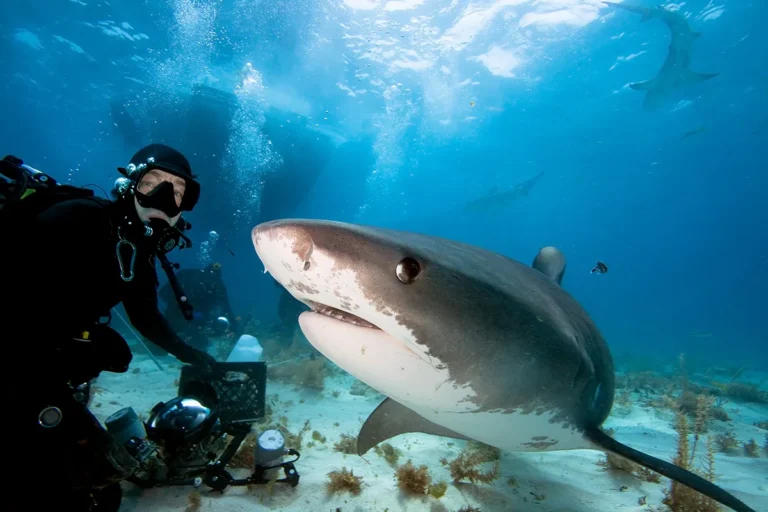
This model looks for the presence of apex predators—sharks, large groupers, and snappers. If a reef is devoid of large predators, it is a lagging indicator of overfishing or ecological imbalance. A “best” reef site is one where the trophic pyramid is intact, from the microscopic polyps to the six-foot reef sharks.
2. The “Rugosity” Framework
Rugosity refers to the structural complexity and “wrinkledness” of the reef. A flat reef offers few hiding places and supports less life. A reef with high rugosity—full of swim-throughs, overhangs, and deep crevices—provides the surface area necessary for massive biodiversity. When assessing sites, divers should prioritize high-rugosity geological formations.
3. The “Recruitment” Indicator
A healthy reef is not just about the old, massive coral heads; it is about the “recruits.” Looking for small, fingernail-sized colonies of new coral growth indicates that the reef is actively regenerating. A site with only large, ancient corals but no new growth is a “senescent” reef that may be in the early stages of collapse.
Categories of U.S. Reef Ecosystems and Operational Trade-offs
| Ecosystem Type | Representative Location | Primary Strength | Significant Trade-off |
| Spur-and-Groove Barrier Reef | Florida Keys | High accessibility; shallow; clear water. | High diver traffic; sensitive to bleaching. |
| Salt Dome / Cap Reef | Flower Garden Banks, TX | Incredible coral density; remote; “wild” feel. | Challenging logistics; prone to rough seas. |
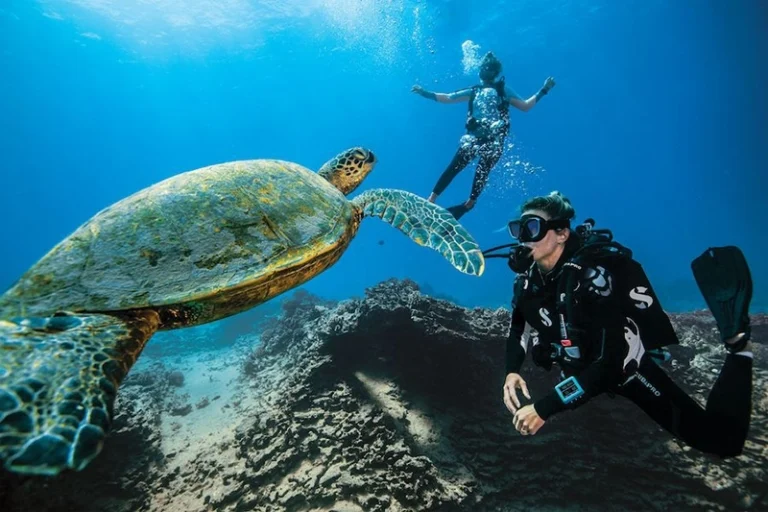
| Volcanic Fringing Reef | Kona, Hawaii | Dramatic topography; endemic species; pelagic access. | Deep drop-offs; lava-rock entries can be difficult. |
| Cold-Water Rocky Reef | Monterey Bay, CA | Massive invertebrate diversity; kelp forest integration. | Extreme thermal demand; low visibility; high surge. |
| Oceanic Atoll Reef | American Samoa / Midway | Near-pristine conditions; massive schools of fish. | Extremely expensive to access; limited infrastructure. |
Realistic Decision Logic
The transition from a “resort” diver to an “expedition” diver occurs when one begins to prioritize Flower Garden Banks or remote Hawaiian outposts over the standard Caribbean-style reefs of the Atlantic. The logic is simple: the harder the reef is to reach, the higher the likelihood of encountering an ecosystem that functions as it did a century ago.
Detailed Real-World Scenarios
Scenario 1: The Florida Keys “Inner vs. Outer” Choice
A diver is based in Key Largo and must choose between a shallow inner reef and an outer ledge.
-
The Constraint: Heavy boat traffic on the inner reef due to proximity.
-
The Decision Point: Choosing the “Outer Grecian” or “French Reef” during a mid-week window.
-
Second-Order Effect: Increased probability of seeing larger rays and sharks that avoid the noise of weekend crowds.
Scenario 2: The Kona Night Manta Experience
Managing a dive on a volcanic fringing reef.
-
The Dynamic: The reef drops off into thousands of feet of water just offshore.
-
The Decision Point: Staying close to the campfire-lit bottom versus venturing into the “blue” during the ascent.
-
Failure Mode: Poor buoyancy control on a vertical wall, leading to an accidental descent past planned limits.
Economics of Domestic Expedition Planning
Planning for the best reef diving in the us involves a complex budget that accounts for the high cost of remote boat charters and specialized gas requirements.
| Expense Category | Estimated Range (USD) | Logic / Variable |
| Daily Boat Charter | $150 – $250 | Includes two tanks; varies by distance from shore. |
| Remote Expedition (3-5 days) | $1,500 – $3,500 | e.g., Flower Garden Banks or Dry Tortugas liveaboard. |
| Equipment Rental | $50 – $100 | High-quality regs and computers are essential for remote sites. |
| Park / Sanctuary Fees | $10 – $50 | Supports conservation; usually per person/per trip. |
Opportunity Cost: The “Flight vs. Boat” Ratio
Divers often spend $800 on a flight to a mediocre international reef but balk at spending $600 for a multi-day domestic liveaboard to the Flower Garden Banks. In terms of “coral coverage per dollar,” the domestic remote option often provides superior value.
Tools, Strategies, and Support Systems
-
Nitrox (Enriched Air): Essential for reefs in the 60-90ft range, allowing for extended bottom time to observe behavior.
-
Surface Marker Buoys (SMB): Non-negotiable for remote Pacific or Gulf reefs where currents can be unpredictable.
-
Polarized Marine Forecasts: Utilizing NOAA’s Wavewatch III models to predict “surge” and “bottom-temp” shifts before booking.
-
Macro/Wide-Angle Modular Lenses: U.S. reefs often feature both massive structures and tiny endemics; the ability to switch in-water is a tactical advantage.
-
Reef Identification Slates: Specifically for “endemic” species in Hawaii or the Gulf to track biodiversity during the dive.
Risk Landscape and Environmental Failure Modes
The primary risks in U.S. reef diving are shifting from “diver error” to “environmental instability.”
-
Thermocline Shock: Rapid temperature drops (10°F+) at depth can lead to hyperventilation or regulator free-flow.
-
Lionfish Invasion: In the Atlantic/Gulf, this invasive species is a compounding risk to reef health, requiring active management (culling).
-
Anchor Damage: Despite mooring ball systems, illegal anchoring remains a threat to the structural integrity of spur-and-groove reefs.
-
Bleaching Events: High-temperature anomalies can turn a vibrant reef into a boneyard in a single season.
Governance, Maintenance, and Long-Term Adaptation
A diver’s relationship with a reef should be one of “longitudinal observation.”
-
Review Cycles: Re-visiting the same site annually to document changes in coral cover or fish density.
-
Adjustment Triggers: If a site shows signs of “algal smothering,” the ethical diver shifts their pressure to less-visited, healthier sites.
-
Maintenance Checklist:
-
Use mineral-based, reef-safe sunscreen (Zinc/Titanium).
-
Practice “Blue Star” or “Green Fins” recognized operator standards.
-
Maintain a strict “no-touch” buoyancy profile (6 feet of clearance).
-
Common Misconceptions and Oversimplifications
-
“Florida’s reefs are all dead.” Correction: While some shallow reefs have struggled, the deeper ledge systems and the protected “Sanctuary Preservation Areas” (SPAs) continue to show remarkable resilience and biomass.
-
“Hawaii has no coral reefs.” Correction: Hawaii features some of the most unique volcanic fringing reefs on earth, with a 25% endemism rate (species found nowhere else).
-
“The best diving is always in the summer.” Correction: In the Gulf of Mexico, the “coral spawn” in August is a peak event, but the water is often calmer and clearer in the late spring.
Conclusion
The pursuit of the best reef diving in the us is an exercise in ecological discernment. It requires the diver to look past the surface-level marketing of tropical resorts and engage with the scientific and logistical realities of the American maritime estate. From the ancient, massive brain corals of the Texas salt domes to the vibrant, endemic-rich walls of the Kona coast, the U.S. offers reef experiences that are as technically challenging as they are biologically rewarding. By applying rigorous mental models and prioritizing remote, well-governed sanctuaries, the dedicated diver ensures that their time underwater is an act of both exploration and witness to the resilience of the ocean’s most vital ecosystems.