Best Wreck Diving United States: The Definitive 2026 Editorial Guide
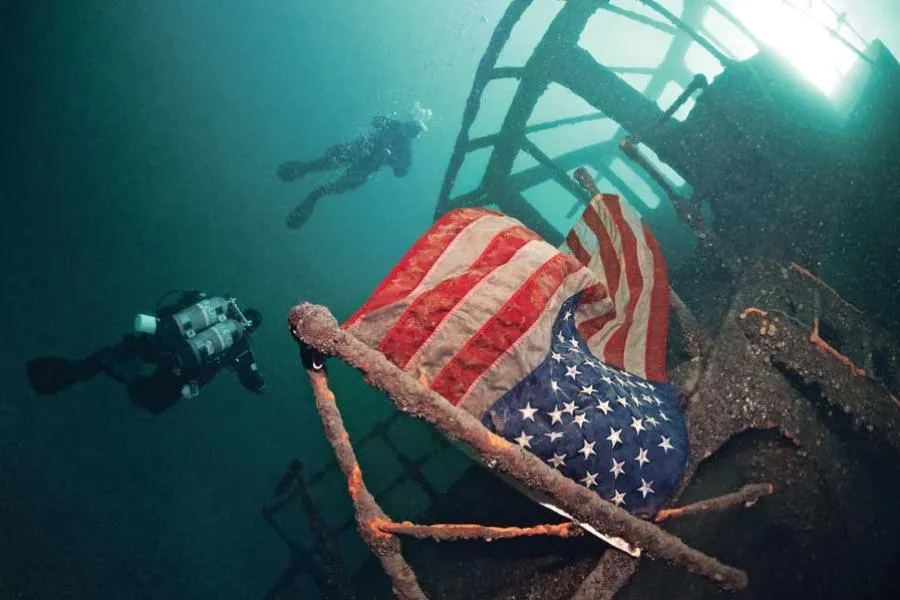
The maritime heritage of the United States is written in iron, steel, and timber across the floors of its coastal waters and Great Lakes. For the underwater explorer, these submerged vessels represent more than mere debris; they are snapshots of industrial evolution, casualties of conflict, and, increasingly, intentionally placed biological engines. The complexity of wreck diving within American waters is defined by its extreme geographic and environmental diversity, ranging from the crystalline, current-swept reefs of the Atlantic to the frigid, preservative depths of Lake Superior.
To engage with these sites effectively requires a shift in perspective from recreation to archaeology and technical management. Each wreck is a deteriorating system, governed by the laws of galvanic corrosion, structural collapse, and ecological colonization. A diver must navigate not only the physical confined spaces of a hull but also the historical context that placed the vessel there. Whether it is a World War II casualty in the “Graveyard of the Atlantic” or a decommissioned aircraft carrier in the Gulf of Mexico, the operational requirements for a safe and meaningful encounter are immense.
This analysis deconstructs the systemic landscape of American wreck exploration. We will move beyond the superficial lists of “famous boats” to examine the mechanics of wreck site selection, the mental models required for overhead environment navigation, and the regulatory frameworks that protect these submerged cultural resources. By treating wreck diving as a rigorous discipline of logistics and observation, we can establish a definitive framework for identifying the most significant and preserved underwater sites in the nation.
Understanding “best wreck diving united states”
The designation of the best wreck diving united states is frequently diluted by marketing jargon that prioritizes accessibility over integrity. For the serious practitioner, “best” is a multi-dimensional metric involving the state of preservation, the historical weight of the vessel, and the biological diversity it supports. A common misunderstanding among recreational divers is that a wreck is a static playground; in reality, it is a volatile structure. An oversimplification often leads divers to gravitate toward “artificial reefs”—ships cleaned and sunk intentionally—while ignoring the profound, though often more challenging, “authentic” wrecks that resulted from genuine maritime disasters.
From a multi-perspective view, the value of a wreck changes based on the diver’s objective. An underwater photographer may prioritize the massive, light-drenched silhouettes of the Florida Keys, whereas a maritime historian might find a small, silt-covered schooner in Lake Michigan to be the superior site due to its pristine wood preservation. Consequently, any definitive ranking must account for the trade-offs between “visual spectacle” and “historical purity.”
The risk of a poorly informed choice in this domain is not merely a disappointing dive, but a failure to recognize the “latent dangers” of certain sites. Some of the most highly-rated wrecks in the U.S. are located in areas of extreme current or significant depth, where the margin for error is razor-thin. Understanding the best wreck diving united states requires an appreciation for the “environmental envelope” of the site—the intersection of depth, temperature, and structural stability that determines the true cost of the encounter.
Historical Context: From Conflict to Conservation
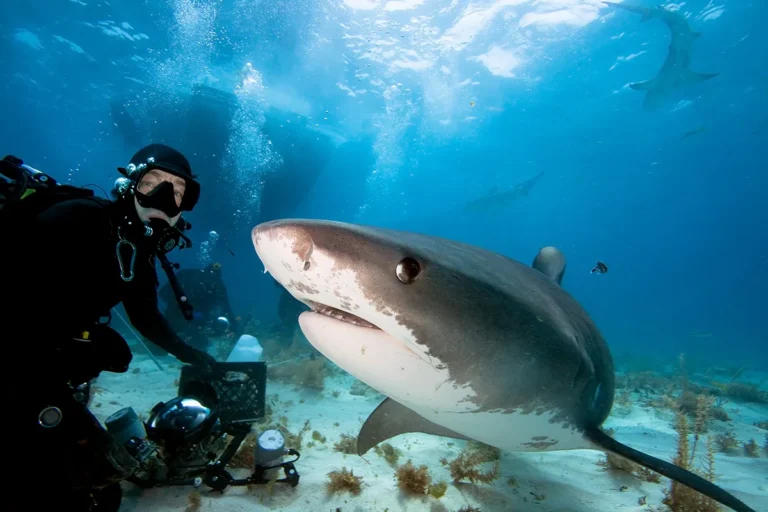
The evolution of wreck diving in the U.S. is inextricably linked to World War II. The “Graveyard of the Atlantic” off North Carolina became a primary theater for U-boat activity, leaving a legacy of tankers, freighters, and submarines that now serve as the premier authentic wreck sites in the Atlantic. These vessels were not prepared for divers; they are jagged, deep, and subject to the powerful forces of the Gulf Stream.
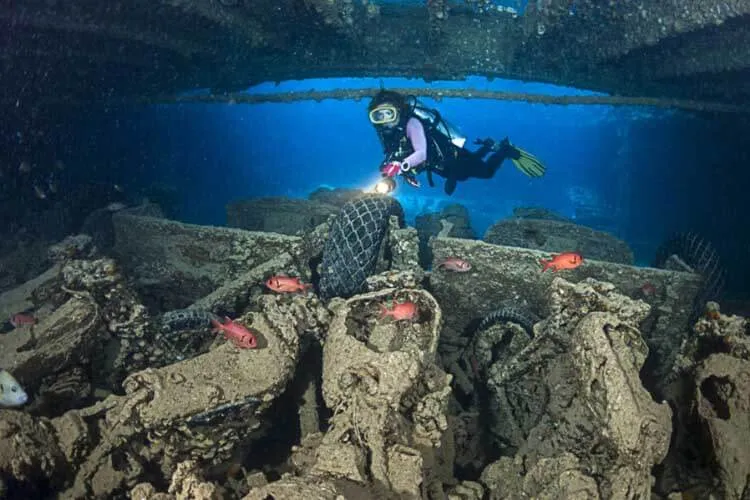
Following the war, the 1960s and 70s saw a shift toward “salvage and recovery,” which often resulted in the destruction of historical sites. However, the 1988 Abandoned Shipwreck Act marked a systemic change, granting states the authority to manage and protect wrecks in their waters. This led to the rise of “Underwater Archaeological Preserves” and the “Artificial Reef Program.” The latter reached its zenith with the sinking of the USS Oriskany in 2006, creating the world’s largest artificial reef and demonstrating that high-end wreck diving could be a significant driver of local economies.
Mental Models for Sunken System Navigation
To operate safely within or around a submerged vessel, divers must adopt specific conceptual frameworks:
1. The “Structural Integrity” Model
A wreck is a decaying machine. This model dictates that one should never assume a ceiling or floor is stable. Corrosion often works from the inside out; a bulkhead that looks solid may be paper-thin. Divers must constantly evaluate the “load-bearing” reality of their surroundings, particularly in the presence of surge or heavy current.
2. The “Penetration vs. External” Logic
This is a binary decision-making framework. External diving is about the silhouette and the ecology; penetration is about “overhead environment” management. The mental model for penetration requires a shift from “open water” thinking to “cave” thinking, where the surface is no longer a direct escape route and “gas-management-by-thirds” becomes the law.
3. The “Silt-Out” Prevention Model
In the confined spaces of a wreck, the greatest danger is often the diver’s own technique. Silt—composed of rust flakes and organic debris—can reduce visibility to zero in seconds if disturbed by a fin kick. The mental model here is “non-contact propulsion,” utilizing frog kicks and finger-walking to maintain a “zero-impact” presence.
Categories of Wreck Sites and Operational Trade-offs
| Category | Typical Location | Primary Strength | Significant Trade-off |
| WWII Authentic | North Carolina | Historical depth; shark encounters. | Strong currents; high-seas logistics. |
| Artificial Reef (Large) | Florida / Gulf Coast | Massive scale; predictable layout. | Can feel “sterile” compared to real disasters. |
| Freshwater Preserved | Great Lakes | Incredible wood/paint preservation. | Extreme cold; requires drysuit/tech gear. |
| Shallow Reef Wrecks | Florida Keys | High visibility; great for photography. | High diver traffic; structural fragmentation. |
| Technical Deep Wrecks | New Jersey / NY | Intact artifacts; rare species. | Very deep (150ft+); requires deco gases. |
Decision Logic for Exploration
The “best” site is often determined by the “Preservation-to-Access” ratio. The Great Lakes offer the highest preservation but the lowest ease of access due to thermal demands. The Florida Keys offer the highest ease of access but the lowest structural integrity due to warm-water corrosion and storm surge.
Detailed Real-World Scenarios
Scenario 1: The “U-352” Descent (North Carolina)
A technical diver seeks the remains of a German submarine at 115 feet.
-
The Dynamic: The wreck sits on a sandy bottom, often buffeted by 3-knot currents.
-
The Decision Point: Choosing the “lee side” of the conning tower for a safety stop.
-
Failure Mode: Dragging an SMB through the jagged rust, causing a line entanglement in high current.
Scenario 2: The Vandenberg Silhouette (Key West)
A recreational diver explores a 523-foot missile tracking ship.
-
The Constraint: The sheer size of the vessel makes it impossible to see in one dive.
-
The Decision Point: Focusing on the iconic radar dishes at 70 feet versus the hull at 140 feet.
-
Second-Order Effect: Managing “Nitrox” limits to maximize time on the upper decks.
Economics of Wreck Exploration: Planning and Resources
The financial burden of wreck diving is driven by “nautical distance” and “gas logistics.”
| Expense Category | Daily Estimate (USD) | Nuance / Variability |
| Specialized Wreck Charter | $180 – $300 | Higher for offshore “Graveyard” trips. |
| Technical Gas (Helitrox) | $100 – $250 | Dependent on depth and “helium” market rates. |
| Drysuit Maintenance | $50 – $100 | Essential for Great Lakes / Northeast diving. |
| Artifact Preservation Fee | $0 – $50 | Some preserves require permits or tags. |
The “Bottom Time” Investment
In wreck diving, the “cost per minute” is high. Divers who invest in “Rebreather” (CCR) technology face massive upfront costs ($10,000+) but significantly reduce their long-term gas costs and increase their “exploration-per-dive” efficiency.
Tools, Strategies, and Technical Support Systems
-
Redundant Gas Supply: For any wreck over 100 feet or involving penetration, a “pony bottle” or doubles configuration is the baseline.
-
Primary Reels and Guidelines: Essential for “laid-line” navigation inside wrecks to prevent getting lost in silt-outs.
-
High-Lumen Primary Lights: Wrecks are “light-eating” environments. A 4,000+ lumen light is necessary to see true colors and identify structural hazards.
-
Redundant Cutting Tools: Entanglement in “ghost fishing gear” (lines and nets) caught on wrecks is a primary failure mode.
-
Lift Bags: Used for marking the wreck’s location or for “decompression” stationing in open-ocean currents.
Risk Landscape: A Taxonomy of the Submerged Environment
Risk in wreck diving is a combination of “Enclosure” and “Entrapment.”
-
Structural Collapse: Spontaneous failure of rusted decks or bulkheads.
-
Entanglement: Monofilament fishing line or “ghost nets” snagged on the superstructure.
-
Disorientation: The “mirror effect” of silt-outs or the “loss of up” inside tilted hulls.
-
Nitrogen Narcosis: Many of the best wrecks sit in the 100–130ft range, where impaired judgment is a constant threat.
Long-Term Governance and Structural Adaptation
The governance of wrecks involves a “stewardship” mindset.
-
Review Cycles: Annual monitoring of wreck “settlement” or “break-up” after major hurricane seasons.
-
Adjustment Triggers: Closing a wreck to penetration if a critical deck beam shows signs of imminent failure.
-
The “Look but Don’t Touch” Rule: Modern ethics dictate that artifacts remain on the wreck for future generations. Taking a “souvenir” is now viewed as a form of cultural theft.
Measurement and Evaluation of Site Quality
-
Leading Indicator: “Structural Complexity.” How many decks and compartments are accessible and intact?
-
Lagging Indicator: “Biomass Density.” Does the wreck host a “Resident Shark” population or massive schools of baitfish?
-
Documentation: Maintaining “Site Maps” that record the slow decay of the vessel over decades of observation.
Common Misconceptions
-
“Artificial reefs are just for beginners.” Correction: The Oriskany and Vandenberg offer complex technical dives that challenge the most experienced explorers.
-
“Great Lakes diving is boring because there are no sharks.” Correction: The preservation of wood and paint from the 1800s provides a “time-capsule” experience that saltwater can never match.
-
“Wreck diving is more dangerous than reef diving.” Correction: It is only more dangerous if the diver lacks the “discipline of configuration” and “situational awareness.”
Conclusion
The exploration of the best wreck diving united states is a commitment to witnessing the intersection of human ambition and oceanic power. It is a discipline that requires the diver to be part mechanic, part historian, and part navigator. From the haunting shadows of the Outer Banks to the pristine, cold-water cathedrals of the Great Lakes, these wrecks offer a depth of experience that transcends mere sightseeing. By adhering to strict technical protocols, respecting the structural fragility of the sites, and valuing the historical narrative of each vessel, the underwater explorer ensures that these sunken monuments continue to tell their stories in the silent, pressurized world below.