Top Shark Diving in America: The Definitive 2026 Editorial Guide
The predatory apex of the marine world occupies a unique space in the American psyche, oscillating between primal fear and scientific fascination. Within the specialized community of underwater explorers, the United States has emerged as a premier global destination for observing these chondrichthyan species in their natural habitats. This status is not merely a result of geographic fortune; it is the byproduct of decades of stringent federal protections, the establishment of vast marine sanctuaries, and a sophisticated ecotourism infrastructure that bridges the gap between high-risk adventure and biological education.
Diving with sharks in American waters is a study in diverse ecological profiles. The logistics required to encounter a Great White in the cold, nutrient-rich waters of the Farallon Islands differ fundamentally from the requirements for observing Hammerheads in the Gulf Stream off Florida or Tiger Sharks in the volcanic depths of the Hawaiian archipelago. Each region presents a distinct set of environmental variables—visibility, temperature, current, and seasonal migration patterns—that demand a high level of technical proficiency and situational awareness from the practitioner.
To truly understand the landscape of these encounters, one must look beyond the sensationalist imagery of “shark feeds” or “caged encounters.” A sophisticated editorial analysis requires a deconstruction of the systemic factors that make a site viable: the health of the local trophic pyramid, the regulatory environment governing interactions, and the ethical considerations of baiting or “chumming” in sensitive ecosystems. This article serves as a definitive reference for those seeking to navigate the complexities of this high-stakes discipline, providing an analytical framework for identifying the most ecologically significant and operationally sound experiences available.
Understanding “top shark diving in america”
When discussing top shark diving in america, the discourse often falls into the trap of hyperbole. For the serious underwater observer, “top” does not necessarily mean “most adrenaline-inducing.” Rather, it refers to the quality of the observation: the naturalness of the behavior, the health of the specimen, and the integrity of the surrounding habitat. A common misunderstanding is that shark diving is a monolithic activity. In reality, it is bifurcated into “passive observation,” where divers wait at known cleaning stations or migration corridors, and “attractant-based diving,” where scent is used to draw animals to a specific location.
Oversimplification in this field often ignores the importance of “individual animal agency.” Sharks are not programmed machines; they are highly sentient predators with complex social hierarchies and varied temperaments. A site that is “top-tier” one week may be dormant the next due to a shift in water temperature or the arrival of an orca pod—a dynamic that requires divers to adopt a long-term, statistical view of their success. The risk of treating these encounters as guaranteed tourist attractions is a failure of both safety and intellectual honesty.
From a regulatory perspective, the U.S. presents a fragmented landscape. Federal waters have different rules than state waters, and certain states, like Florida, have banned shark feeding in state-controlled areas while it remains a cornerstone of the industry just miles offshore. Navigating this requires a diver to be a student of maritime law as much as marine biology. To identify the top shark diving in america, one must evaluate the operator’s commitment to “low-impact” protocols that prioritize the animal’s long-term health over the diver’s immediate photographic desires.
The Systemic Evolution of Shark Conservation and Tourism
The trajectory of shark diving in the United States reflects a broader shift in environmental values. Following the cultural impact of Jaws in the 1970s, the prevailing attitude was one of extraction and eradication. However, the late 20th century saw a scientific awakening regarding the role of sharks as “keystone species.” The 1997 implementation of the Federal Shark Recovery Plan and the subsequent Shark Finning Prohibition Act of 2000 created a domestic environment where shark populations could stabilize and, in some cases, thrive.
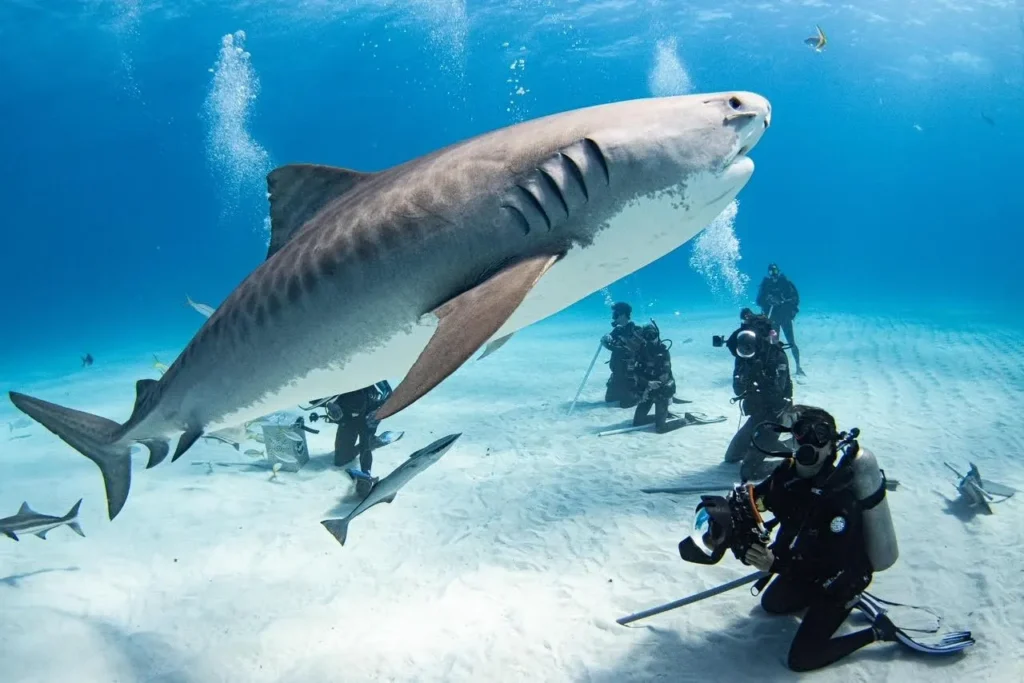
As populations recovered, the “living shark” became more valuable than the “harvested shark.” In regions like Jupiter, Florida, or the North Shore of Oahu, a single shark can generate hundreds of thousands of dollars in tourism revenue over its lifetime. This economic reality has led to the “professionalization” of the industry. We have moved from “cowboy” operators to sophisticated maritime companies that employ marine biologists, use specialized cages and safety gear, and contribute data to global tracking databases. This systemic evolution ensures that modern American shark diving is arguably the most regulated and safety-conscious in the world.
Mental Models for Apex Predator Interactions
To safely and effectively engage with large sharks, divers should internalize these conceptual frameworks:
1. The “Trophic Level” Awareness
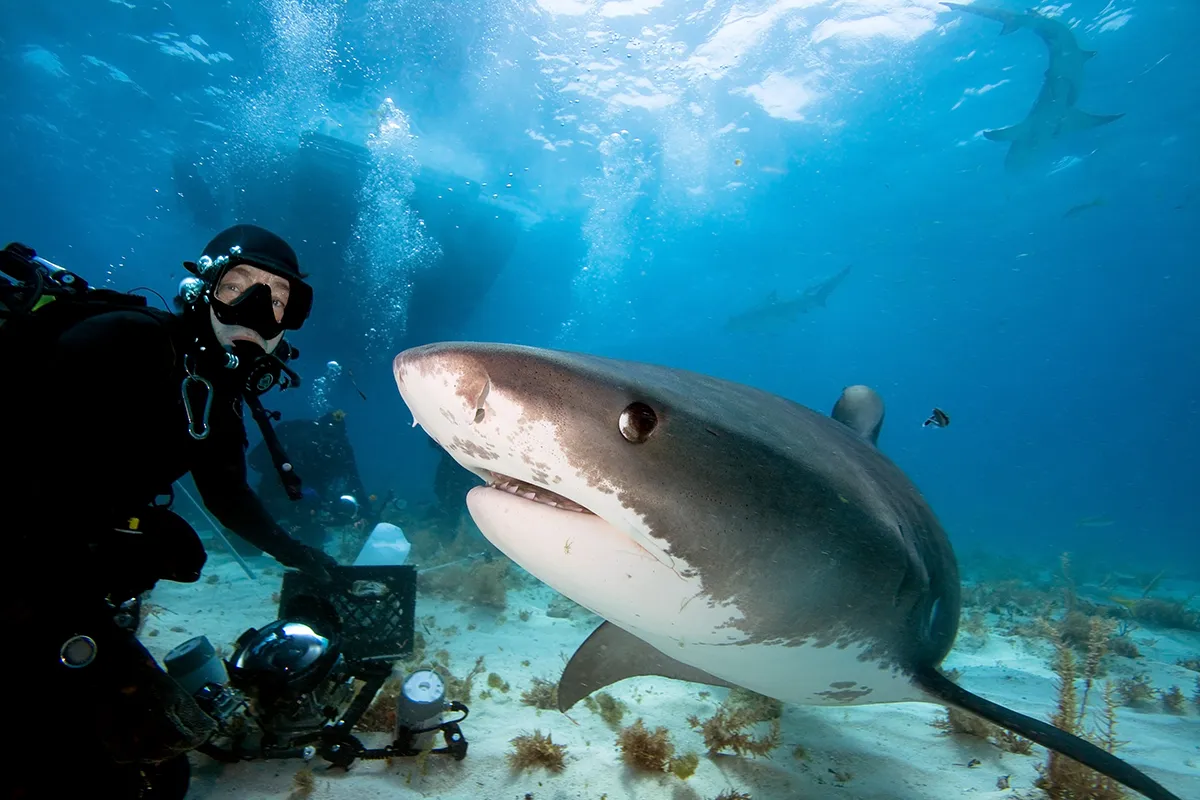
Understanding that you are entering the territory of a predator that occupies the highest trophic level. The diver is not “prey,” but they are also not “alpha.” The mental model here is “non-threatening observer.” Any sudden, erratic movements or aggressive posturing can trigger a defensive or competitive response from the shark.
2. The “360-Degree Sphere”
Unlike reef diving, where the focus is often downward or forward, shark diving happens in a three-dimensional blue void. The mental model must be a constant 360-degree sweep. Sharks are “ambush-adjacent” predators; they often approach from the “blind spot” or the “sun-side” to assess the diver’s awareness.
3. The “Scent-Cone” Logic
In dives where chum or bait is used, the diver must understand the geometry of the “scent-cone” trailing behind the boat. Sharks will follow this line of scent. Positioning yourself outside of the direct path between the shark and the source of the scent is a foundational safety protocol to avoid accidental contact.
Categories of Shark Encounters and Operational Trade-offs
| Encounter Type | Representative Location | Primary Target | Significant Trade-off |
| Blue Water / Pelagic | Jupiter, FL | Lemon, Tiger, Bull | High current; requires advanced buoyancy. |
| Caged Surface | Farallon Islands, CA | Great White | High cost; cold water; limited viewing time. |
| Volcanic Ledge | Kona/Oahu, HI | Galapagos, Sandbar | Deep drop-offs; unpredictable swell. |
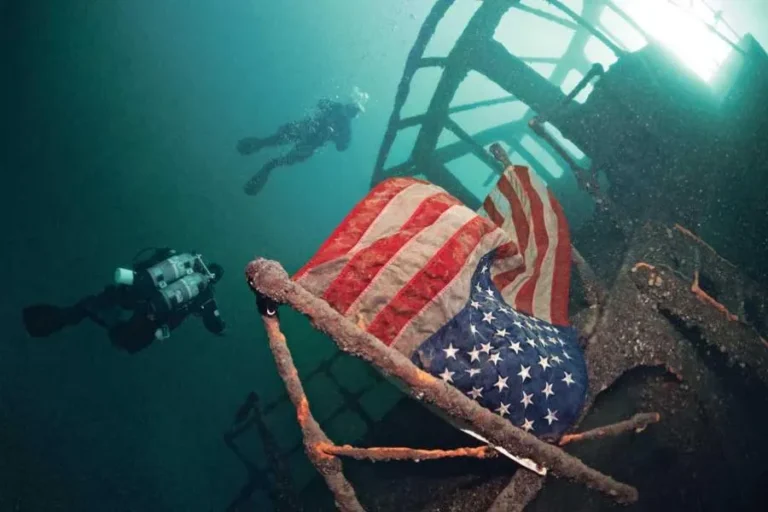
| Shipwreck/Artificial | North Carolina | Sand Tiger (Ragged Tooth) | Often low visibility; surge-heavy environments. |
| Kelp Forest | La Jolla, CA | Seven-gill, Leopard | Entanglement risks; very cold water. |
Realistic Decision Logic
The “best” encounter is often a factor of “Seasonality vs. Specificity.” If the goal is a Tiger Shark, the logic dictates a winter trip to Florida or a year-round venture to Hawaii. If the goal is the sheer density of animals, the Florida Gulf Stream during the Lemon Shark migration (January-March) provides the highest “encounters-per-dive” ratio in the country.
Detailed Real-World Scenarios
Scenario 1: The “Jupiter” Drift
A diver enters the Gulf Stream three miles off the Florida coast.
-
The Dynamic: A 2-knot current carrying the diver over a 90-foot bottom.
-
The Decision Point: Managing the “Safety Stop” while five Bull Sharks circle in the blue.
-
Failure Mode: Losing sight of the surface buoy or drifting away from the group, necessitating a long surface wait in predatory waters.
Scenario 2: The Farallon Great White Expedition
A diver spends 12 hours on a boat to reach the “Red Triangle.”
-
The Constraint: Massive 10-foot swells and 50°F water.
-
The Result: 20 minutes of cage time with a 16-foot female Great White.
-
Second-Order Effect: The psychological toll of the “waiting game,” where days can pass without a sighting, emphasizing the “wilderness” aspect of the pursuit.
Economics of the Expedition: Cost and Resource Allocation
Shark diving is a “capital-intensive” hobby due to the fuel costs of reaching offshore pelagic zones and the specialized insurance required for operators.
| Expense Category | Daily Estimate (USD) | Logic / Variability |
| Pelagic Charter (FL/HI) | $200 – $350 | Includes 2-3 tanks and safety divers. |
| Great White Expedition | $800 – $1,200 | Includes permits, specialized cages, and meals. |
| Professional Safety Diver | $50 – $100 | Usually included; essential for non-cage dives. |
| Specialized Thermal Gear | $500 – $1,000 | Purchase of 7mm or drysuit for cold-water sites. |
Opportunity Cost: The “Value of the Safety Diver”
In un-caged shark diving, the most valuable resource is the “Safety Diver”—a professional who remains above or behind the group specifically to watch for sharks approaching from the rear. Cutting costs by choosing an operator without a dedicated safety diver is a fundamental error in risk management.
Tools, Strategies, and Support Systems
-
Dull/Dark Equipment: Sharks are attracted to high-contrast and shiny objects (“Yum-Yum Yellow”). Professional shark divers use “blacked-out” gear—dark masks, fins, and wetsuits—to avoid being mistaken for flashes of fish scales.
-
Long Fins (Freediving Style): Even for SCUBA, long fins allow for more powerful, calm movements, which are less likely to signal “distress” to a predator.
-
Acoustic/Electronic Deterrents: While controversial, some divers use devices like the Shark Shield as a “last-line” of defense in exploratory diving.
-
Bait Boxes: Used to contain scent without providing a “food reward,” maintaining the shark’s interest without altering its predatory drive.
-
VHF Marine Radio / PLBs: Essential for pelagic drifts where the diver might surface a mile away from the boat.
Risk Landscape: A Taxonomy of Failure Modes
Risk in shark diving is rarely about “unprovoked attack” and almost always about “miscommunication” or “environmental compounding.”
-
Mechanical Failure: A BCD inflator sticking during a deep-water pelagic dive, causing an uncontrolled ascent.
-
Behavioral Failure: Reaching out to touch a shark (a catastrophic breach of protocol) which can turn a curious animal into a defensive one.
-
Environmental Compounding: High surge in a shipwreck environment causing a diver to be pushed into a resting shark, triggering a “snap” response.
-
Visual Failure: Poor visibility leads to a diver not seeing a shark’s “agonistic display”—the hunched back and lowered fins that signal “back off.”
Long-Term Governance and Ecological Adaptation
The “governance” of shark diving is increasingly becoming a community-led effort.
-
Review Cycles: Professional divers participate in “citizen science” by uploading photos of shark dorsal fins to databases like Manta Matcher or Sharkbook to track individual health.
-
Adjustment Triggers: If a particular shark begins to show “over-conditioned” behavior (approaching boats too closely or ignoring natural prey), ethical operators will cease diving in that location for a period to allow the animal to “reset.”
-
Layered Checklist:
-
Is my gear “blacked out” to minimize flash?
-
Did I verify the operator’s safety-diver-to-guest ratio?
-
Do I have a surface signal device (SMB) for pelagic drifts?
-
Measurement and Evaluation of Encounter Efficacy
-
Leading Indicator: “Average Approach Distance.” A successful, respectful dive is one where the shark feels comfortable enough to pass within 10-15 feet without showing signs of stress.
-
Lagging Indicator: “Species Variety per Season.” Tracking how many different species (e.g., Mako, Thresher, Silkies) are seen over a 5-year period to gauge the health of the local Gulf Stream or Pacific current.
-
Documentation: Maintaining a “Behavioral Log” that records water temperature, moon phase, and shark temperament (e.g., “skittish,” “investigatory,” “dominant”).
Common Misconceptions and Ethical Realities
-
“Sharks are bloodthirsty.” Correction: Sharks are cautious and often “scared” of the noisy, bubble-blowing divers. Most “aggressive” behavior is actually the shark trying to figure out what the diver is.
-
“Baiting makes sharks attack people.” Correction: Extensive studies (e.g., in Hawaii and Florida) have shown no correlation between organized shark diving and increased beach incidents.
-
“Cages are only for people who are scared.” Correction: Cages are a logistical necessity for Great Whites because their hunting style—high-speed vertical ambushes—makes un-caged observation impossible to manage safely.
Conclusion
The pursuit of the top shark diving in america is a journey into the last true wilderness on the planet. It is an activity that demands a high degree of intellectual and physical discipline, stripping away the comforts of the reef for the raw, unpredictable reality of the open ocean. By prioritizing operators who focus on conservation, employing “black-out” gear strategies, and adhering to strict behavioral protocols, the diver can move from being a fearful spectator to a witness of one of nature’s most ancient and efficient biological designs. In the end, a successful shark dive is not one where the shark “attacks,” but one where it accepts the diver as a silent, non-threatening ghost in its blue world.