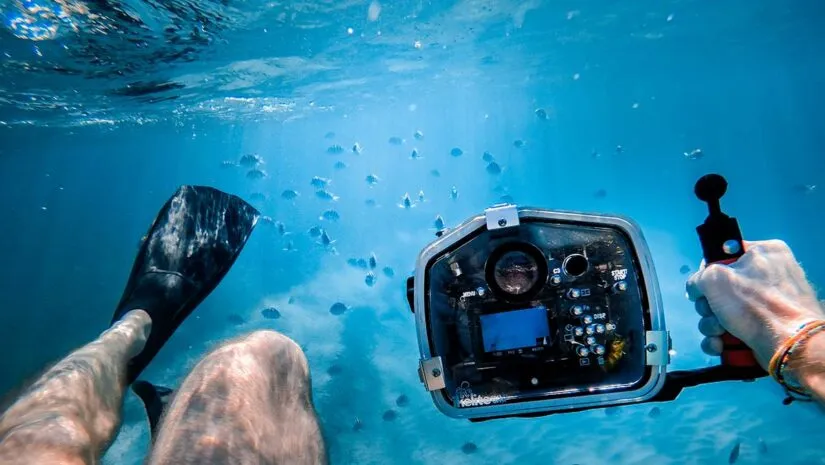
Top Underwater Photography Plans: The Definitive 2026 Editorial Guide
The mastery of underwater imaging is rarely the result of spontaneous artistic flair; rather, it is the byproduct of rigorous structural preparation. To capture the ethereal interplay of light and aquatic life, a practitioner must navigate a punishing intersection of physics, physiology, and high-stakes technical management. The transition from terrestrial photography to the sub-aquatic realm involves a fundamental decoupling from familiar light behaviors, requiring a comprehensive reimagining of how a scene is constructed and executed.
In this high-pressure environment, the difference between a portfolio-grade asset and a catastrophic equipment failure often rests on the sophistication of one’s preparatory frameworks. These systems—referred to here as top underwater photography plans—encompass much more than just a camera setting or a lens choice. They represent a holistic strategy that integrates dive safety, light absorption physics, and environmental ethics into a singular, repeatable workflow.
This analysis moves beyond the “how-to” guides common in consumer media. Instead, it treats underwater photography as a complex systems-engineering problem. By dissecting the structural requirements of different underwater environments—from the high-speed chases of pelagic “blue water” to the surgical precision of macro “muck” diving—we can establish a hierarchy of preparation that ensures both artistic success and operational safety.
Understanding “top underwater photography plans”
The phrase “top underwater photography plans” is frequently stripped of its technical weight, often reduced to a list of gear recommendations. This is a significant oversimplification. A true “plan” in this context is a multi-dimensional roadmap that accounts for the logarithmic loss of color with depth, the refractive index of water, and the diver’s own physiological constraints. To plan for top-tier results, one must account for the “lost dimensions” of water: the rapid disappearance of the red end of the spectrum and the magnification effect that makes subjects appear 33% larger and closer than they are.
A common misunderstanding among terrestrial photographers is that high-end equipment can compensate for poor environmental planning. In the water, the reverse is often true. A diver with a modest compact camera and a superior understanding of buoyancy and light positioning will consistently outperform a novice with a high-resolution rig who lacks a structured approach. Consequently, the top underwater photography plans focus heavily on the “pre-shot” phase: identifying the biological behavior of the subject, predicting the sun’s angle relative to the surface swell, and managing the “silting” risk inherent in bottom-dwelling subjects.
Oversimplifying these plans leads to high frustration and “gear churn”—where photographers repeatedly upgrade their equipment without addressing the fundamental flaws in their operational logic. A definitive plan must be resilient to changing conditions, such as sudden thermoclines or shifts in visibility, and must prioritize the integrity of the marine ecosystem over the acquisition of the image.
The Physics of the Abyss: Contextual Background
Historically, underwater photography was the domain of specialized scientists and explorers like Louis Boutan and Jacques-Yves Cousteau. The evolution of the craft has been a constant battle against the “dense medium.” Water is approximately 800 times denser than air, which creates two primary hurdles: absorption and scattering.
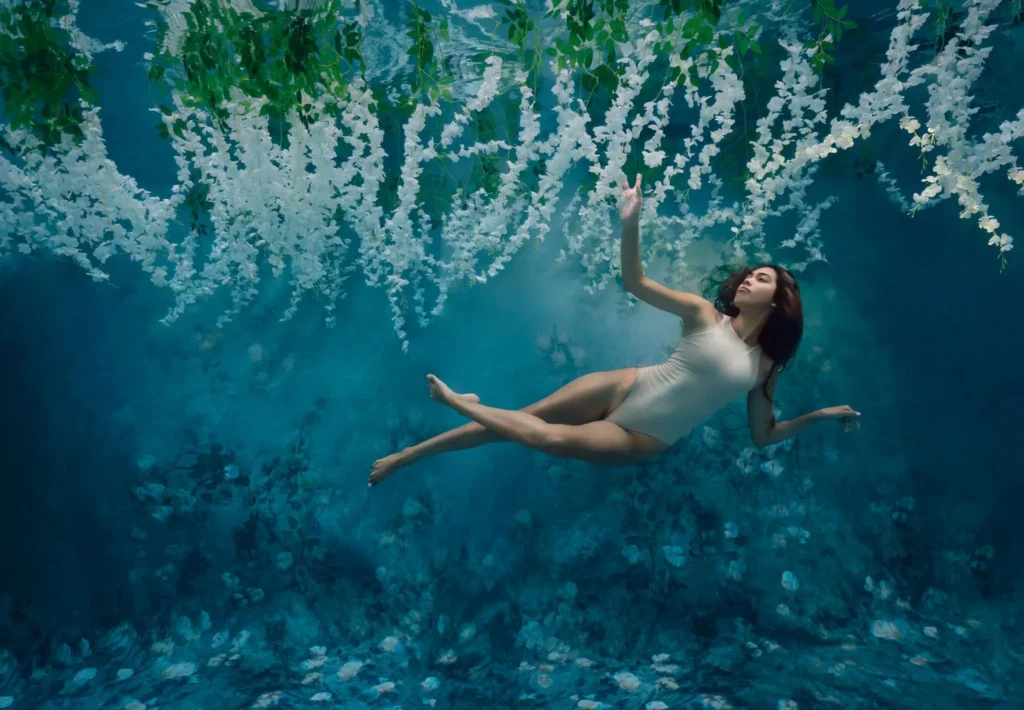
Absorption occurs as water molecules and dissolved minerals soak up light energy. Red is the first to go, often disappearing within the first 15 feet, followed by orange, yellow, and green. By 60 feet, the world is a monochromatic blue-gray. Scattering, on the other hand, is the result of light bouncing off suspended particles—plankton, sand, or “marine snow.” This creates backscatter, the bane of underwater imaging, where the strobe light illuminates the debris between the lens and the subject rather than the subject itself. Understanding this systemic evolution from film-based “blind” shooting to modern digital immediacy allows a photographer to appreciate why modern top underwater photography plans rely so heavily on external lighting and close-proximity optics.
Conceptual Frameworks and Mental Models
To navigate the complexity of the underwater studio, photographers should employ specific mental models:
1. The “Close-Focus Wide-Angle” (CFWA) Model
This is the foundational pillar of modern underwater work. The goal is to get as close as possible to the subject to minimize the amount of water (and thus particles) between the glass and the creature. This mental model forces the photographer to prioritize wide-angle lenses that can focus inches away, creating a sense of scale while maintaining color saturation.
2. The “Buoyancy as a Tripod” Framework
On land, a tripod provides stability. Underwater, stability is a function of core strength and lung volume control. A top-tier plan treats the diver’s body as a stabilized gimbal. If buoyancy is not mastered, the plan fails regardless of the camera settings, as the photographer will either crash into the reef or constantly oscillate vertically.
3. The Light-Inverse Square Law Application
In water, the drop-off of artificial light is brutal. If you double the distance from your strobe to your subject, you don’t get half the light; you get a fraction of it. This model dictates that strobes are not “flashbulbs” but “sculpting tools” that must be repositioned for every single shot.
Key Categories or Variations
There is no singular “perfect” plan; there are only optimizations for specific niches.
| Category | Primary Focus | Key Trade-off | Equipment Bias |
| Wide-Angle Pelagic | Sharks, whales, wrecks | High dependence on ambient light | Fisheye lenses, large domes |
| Macro/Super Macro | Nudibranchs, pygmy seahorses | Razor-thin depth of field | Macro ports, “snoots” |
| Fluorescence (Fluo) | Bio-luminescent corals/fish | Requires total darkness; high ISO | Blue filters, yellow barrier filters |
| Blackwater | Vertical migration organisms | Extremely difficult focusing | Handheld spotting lights |
| Ambient Light Only | Shallow reef / Snorkeling | No color below 20ft | Magic filters, white balance |
Decision Logic for Plan Selection
The top underwater photography plans are selected based on the “Visibility-to-Subject Size” ratio. If visibility is low (less than 15 feet), a wide-angle plan will likely fail due to backscatter, making a macro-focused plan the logical adaptation.
Detailed Real-World Scenarios
Scenario 1: The High-Current Drift
Photographers in places like the Galápagos or Komodo must shoot while moving at 3 knots.
-
The Plan: Streamlined rig, shutter-priority mode to freeze action, and a “pre-set” strobe position.
-
Failure Mode: Trying to adjust strobe arms mid-drift, leading to task loading and potential separation from the dive group.
Scenario 2: The Muck Dive
Hunting for tiny critters on a silty volcanic slope in Lembeh.
-
The Plan: Negatively buoyant positioning, “muck sticks” to stabilize without touching the silt, and tight strobe positioning to avoid illuminating the sand.
-
Second-Order Effect: Mastery here leads to incredible “alien” portraits, but a single misplaced fin kick ruins the shot for 20 minutes.
Planning, Cost, and Resource Dynamics
The economic barrier to entry for top underwater photography plans is significant. It is not uncommon for the “housing” (the waterproof shell) to cost twice as much as the camera body itself.
| Resource Level | Estimated Cost (USD) | Capability |
| Entry-Level Compact | $800 – $1,500 | Internal flash, basic macro, limited wide. |
| Mid-Range Mirrorless | $4,000 – $7,000 | Dual strobes, interchangeable ports, 4K video. |
| Professional Full-Frame | $15,000 – $40,000+ | External monitors, vacuum leak detection, ultra-wide optics. |
Risk Landscape and Failure Modes
The “failure” in this field is rarely artistic; it is usually mechanical.
-
O-Ring Compromise: A single hair or grain of sand on a silicone seal leads to a “flood,” destroying thousands of dollars in milliseconds.
-
Pressure Imbalance: Descending without equalizing the air inside a housing can crack acrylic domes.
-
Task Loading: The “photographer’s trance,” where focusing on a screen leads to ignoring air supply or depth limits, a primary cause of diving accidents.
Measurement, Tracking, and Evaluation
How does one measure the success of their top underwater photography plans?
-
Leading Indicator: “Shots per Liter.” How much air do you consume to get one “keeper”? Lower consumption indicates higher comfort and better planning.
-
Qualitative Signal: The absence of “marine snow” in unedited files.
-
Quantitative Signal: Dynamic range retention in the shadows of a deep-water wreck shot.
Common Misconceptions
-
“I can just fix the color in post-processing.” You cannot “recover” red light that was never recorded. If the data isn’t there, “Post” just turns the image into a noisy, purple mess.
-
“More megapixels are better.” In water, lens quality and strobe power are infinitely more important than sensor resolution.
-
“Strobes should point at the subject.” Incorrect. Strobes should usually point slightly away or be placed far to the sides to “edge-light” the subject and avoid backscatter.
Conclusion
Developing top underwater photography plans is an exercise in humility and patience. It requires the photographer to accept that they are a guest in a hostile medium. The most successful images are not those created by the most expensive cameras, but those born from a deep understanding of aquatic physics and a disciplined, checklist-driven approach to the dive. As technology advances, the tools will change, but the fundamental need to manage light and water will remain the true measure of an underwater artist.