Tropical Diving Destinations USA: The Definitive Guide to American Reefs
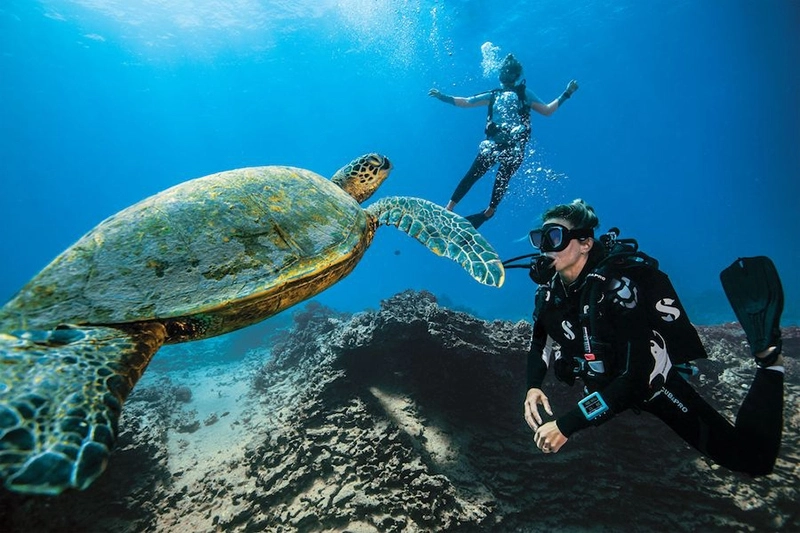
The geographic reach of the United States extends far beyond its continental boundaries, encompassing a vast array of marine ecosystems that rival the most celebrated international locales. For the underwater enthusiast, the search for tropical diving destinations usa is not merely a quest for warm water, but an exploration of complex geological histories, unique endemic species, and the sophisticated management of some of the world’s most protected maritime environments. From the coral-encrusted shipwrecks of the Florida Keys to the volcanic arches of the Hawaiian archipelago, and further still to the remote outposts of American Samoa and Guam, these destinations offer a spectrum of biodiversity that is as diverse as the nation’s terrestrial landscapes.
The complexity of these environments necessitates a shift from casual tourism toward an analytical understanding of marine biology, seasonal logistics, and the administrative frameworks that govern public access. These are not static playgrounds; they are dynamic, sensitive habitats that exist at the intersection of recreational demand and rigorous conservation mandates. To engage with them as a serious diver requires looking past the glossy travel brochures and into the data—water temperature gradients, thermocline depths, pelagic migration patterns, and the socio-economic impacts of dive tourism on local island communities.
Understanding the internal variety within the U.S. jurisdictional waters allows for a more strategic approach to dive planning. While many divers may colloquially equate “tropical” with a simple lack of a wetsuit, the technical reality involves a sophisticated appraisal of salinity, visibility (measured in meters or feet depending on local standards), and the specific biomass density of various reef zones. This article serves as a definitive reference for those seeking to understand the deep-tissue mechanics of American tropical diving, providing a framework that values ecological integrity as much as adventure.
Understanding “tropical diving destinations usa”
When discussing tropical diving destinations usa, it is critical to address the term not as a marketing catchphrase, but as a specific ecological and jurisdictional classification. The United States manages a massive Exclusive Economic Zone (EEZ) that includes some of the most remote and pristine tropical reefs on the planet. The core misunderstanding often lies in the geographic scope; many divers limit their view to Florida, overlooking the Pacific territories and the Caribbean islands that operate under U.S. federal law and safety standards.
The oversimplification risk here is high. For example, assuming that all “tropical” waters are the same leads to significant gear and preparation errors. Diving the Big Island of Hawaii, with its sudden drop-offs into thousand-foot depths and cooler volcanic-fed waters, requires a different mental model than the shallow, sun-drenched patch reefs of Key Largo. Furthermore, the term encompasses a variety of management styles—from National Marine Sanctuaries (NOAA) to National Parks (NPS)—each with distinct rules regarding touch, take, and vessel anchoring.
To understand these destinations is to recognize the “U.S. Advantage.” This includes the presence of the U.S. Coast Guard for search and rescue, the prevalence of DAN-certified hyperbaric chambers, and a standardized dive professional training system (PADI, NAUI, SSI) that provides a consistent baseline of safety. However, this same convenience can lead to complacency, as divers may underestimate the raw power of the Pacific or the Caribbean’s hurricane-prone seasonal shifts.
Deep Contextual Background
The evolution of the U.S. as a leader in tropical diving is rooted in both military history and the post-WWII explosion of leisure technology. Following the development of the Aqua-Lung by Cousteau and Gagnan, the U.S. Navy’s extensive research into decompression and nitrogen narcosis provided the scientific backbone for what would become recreational diving.
In the mid-20th century, places like the Florida Keys became laboratories for the first commercial dive operations. The establishment of Pennekamp Coral Reef State Park in 1960—the first undersea park in the U.S.—marked a pivotal shift from an extraction-based view of the ocean to a conservation-based one. This model was exported to Hawaii and later to the territories.
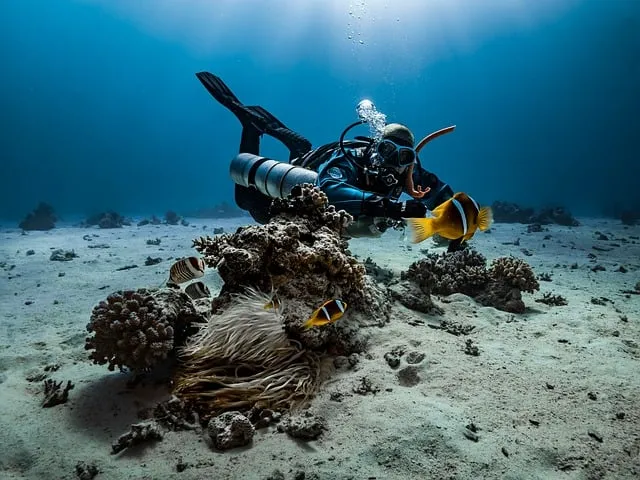
The 1970s and 80s saw the formalization of the National Marine Sanctuary system. This was a response to the “tragedy of the commons” occurring on easily accessible reefs. As air travel became more affordable, the remote Pacific territories (Guam, Saipan, American Samoa) moved from being primarily military outposts to being world-class dive destinations. This historical trajectory has created a unique landscape where high-tech modern infrastructure often sits right next to ancient, traditional fishing grounds, requiring a delicate balance between modern tourism and indigenous maritime rights.
Conceptual Frameworks and Mental Models
To effectively navigate tropical diving destinations usa, one should employ specific mental models that go beyond “finding fish.”
1. The Ecological Gradient Model
This framework views dive sites not as isolated points, but as part of a gradient from the shore to the open ocean (pelagic zone).
-
Inshore/Mangrove: High nurseries, low visibility, high nutrient load.
-
Reef Crest: High energy, high coral density, significant surge.
-
Wall/Drop-off: High pelagic sightings, high current, technical requirements.
-
Limit: This model ignores the impact of localized pollution or “bleaching” events that can disrupt the expected gradient.
2. The Operational Safety Margin (OSM)
In U.S. waters, divers often rely on the “infrastructure safety net.” The OSM model forces a diver to calculate their safety based on the absence of that net.
-
Kona, HI: High OSM (Multiple chambers, specialized medical evac).
-
American Samoa: Low OSM (Extremely remote, limited specialized medical care).
-
Limit: Over-reliance on OSM can lead to risk-taking behavior (the “safety paradox”).
3. The Connectivity Framework
This model considers how different regions are linked by currents (like the Gulf Stream or the North Equatorial Current). It helps a diver understand why they might see the same species in Puerto Rico as they do in the Florida Keys.
-
Limit: Migratory patterns are increasingly unpredictable due to thermal anomalies.
Key Categories and Regional Variations
The following table categorizes the primary tropical diving destinations usa by their core environmental and logistical characteristics:
Realistic Decision Logic
Choosing between these involves a trade-off between accessibility and biodiversity density. Florida offers the most robust infrastructure and ease of travel but faces higher “diver pressure” (human impact). Conversely, American Samoa offers a window into an untouched world but requires significant travel time and self-sufficiency, as commercial dive shops are sparse.
Detailed Real-World Scenarios
Scenario A: The Technical Wreck Diver in the Florida Keys
-
Constraint: Strong Gulf Stream currents and variable visibility.
-
Decision Point: Choosing between the USS Spiegel Grove (Key Largo) or the USNS Gen. Hoyt S. Vandenberg (Key West).
-
Failure Mode: Underestimating “bottom time” due to the massive scale of the wrecks, leading to unplanned deco stops.
-
Second-order Effect: High-volume wreck diving supports a massive local economy but necessitates frequent “mooring buoy” maintenance to prevent anchor damage.
Scenario B: The Pelagic Enthusiast in Kona, Hawaii
-
Constraint: Deep water starts very close to shore; vertical migration of species.
-
Decision Point: Participating in a “Blackwater Dive” (tethered in the open ocean at night).
-
Failure Mode: Disorientation in the water column due to lack of visual references (loss of “up” vs. “down”).
Scenario C: The Remote Explorer in the USVI (St. Croix)
-
Constraint: Seasonal swells on the North Shore.
-
Decision Point: Diving “The Wall” at Cane Bay.
-
Failure Mode: Difficulty with shore entries/exits during high surf, resulting in equipment damage or minor injury.
Planning, Cost, and Resource Dynamics
Diving in the U.S. tropics is often perceived as more expensive than “budget” international destinations like Roatán or Cozumel, but the cost structure is different. You are paying for regulatory oversight, cleaner fuel, and higher labor standards.
Opportunity Cost: Choosing a domestic tropical destination often saves time on visa processing and international customs, allowing for more “bottom time” per vacation day. However, the opportunity cost of not going to a remote territory like Guam is the loss of seeing unique Indo-Pacific biodiversity found nowhere else in the U.S.
Tools, Strategies, and Support Systems
To maximize the experience at tropical diving destinations usa, divers should utilize a specific suite of resources:
-
NOAA Real-Time Buoy Data: Essential for checking wave heights and water temperatures before heading out.
-
NPS Ranger Briefings: In places like Biscayne National Park, rangers provide critical updates on lionfish culling zones or coral spawning events.
-
Redundant Life Support: In remote Pacific territories, carrying a “pony bottle” or redundant air supply is a common strategy due to the distance from support.
-
Digital Reef Maps: High-resolution bathymetric maps are available for many U.S. sanctuaries, allowing for better pre-dive visualization.
-
Citizen Science Apps (e.g., REEF.org): Divers can contribute to national databases by reporting fish sightings, turning a hobby into data.
-
Surface Marker Buoys (SMB): A non-negotiable tool in U.S. waters due to high boat traffic and strong currents.
-
Marine Weather Apps (PredictWind/Windy): Used to forecast “blow out” days where diving is unsafe.
Risk Landscape and Failure Modes
The risks in American tropical waters are often systemic rather than just biological.
-
Environmental Compounding: A minor equipment failure (broken fin strap) compounded by a strong current in the Florida Straits can quickly become a “lost diver” situation.
-
The “Domestic Comfort” Trap: Divers may be less cautious because they are “still in the U.S.,” ignoring the fact that the ocean is indifferent to national borders.
-
Hyperbaric Delay: In territories like American Samoa, the nearest chamber may be a flight away. A “wait and see” approach to DCI (Decompression Illness) symptoms is a common, often fatal, failure mode.
-
Taxonomy of Risks:
-
Physical: Barotrauma, entanglement in ghost gear.
-
Biological: Stonefish (Pacific), Fire Coral (Caribbean), Lionfish (Invasive/Stings).
-
Logistical: Rental gear failure in remote areas without spares.
-
Governance, Maintenance, and Long-Term Adaptation
The longevity of tropical diving destinations usa depends on a multi-layered governance structure. The Office of National Marine Sanctuaries (ONMS) manages over 600,000 square miles of marine underwater territory.
Maintenance Checklist for Managed Sites:
-
Mooring Buoy Integrity: Monthly checks to prevent anchor-related reef destruction.
-
Invasive Species Management: Regular “derbies” to remove Lionfish from Atlantic/Caribbean waters.
-
Water Quality Monitoring: Testing for nitrogen runoff from agricultural sources which leads to algae blooms.
-
Coral Restoration: Active “nurseries” where staghorn and elkhorn corals are grown and out-planted.
Adjustment Triggers: If coral cover drops below a certain percentage or bleaching hits a specific threshold, NOAA may implement temporary “rest periods” for certain reefs, closing them to all divers.
Measurement, Tracking, and Evaluation
How do we know if a destination is “healthy” or “successful”? We look at specific signals:
-
Leading Indicators: Increasing counts of “apex predators” (sharks, groupers); high recruitment rates of juvenile fish.
-
Lagging Indicators: Total coral cover percentage; presence of “old growth” coral heads (centuries-old colonies).
-
Qualitative Signals: Diversity of species seen on a standard 60-minute dive; clarity of the water (visibility).
-
Quantitative Signals: Numbers of divers per year (carrying capacity); revenue generated for local conservation funds.
Common Misconceptions and Oversimplifications
-
“Hawaii is just like the Caribbean.” Incorrect. Hawaii is volcanic with 25% endemism (species found nowhere else); the Caribbean is a traditional coral reef system.
-
“I don’t need a wetsuit in the tropics.” Even 80°F (27°C) water will eventually cause hypothermia through conductive heat loss over multiple dives.
-
“All the good diving is in Florida.” Florida is the most accessible, but the “best” diving (in terms of biomass and health) is arguably in the remote Pacific territories or the Flower Garden Banks in the Gulf of Mexico.
-
“National Parks are for hiking, not diving.” Some of the best U.S. diving is in Dry Tortugas or Virgin Islands National Park.
-
“The water is always calm.” Tropical storms and “Northers” can create 10-foot seas in minutes.
-
“I can’t get ‘bent’ on a shallow reef.” Most DCI cases occur in less than 60 feet of water due to rapid ascents or multiple-day repetitive diving.
Ethical and Practical Considerations
Diving in U.S. tropical waters carries a specific ethical burden: the “Look but don’t touch” policy is not just a suggestion, it is often federal law under the Marine Mammal Protection Act or the Endangered Species Act. Practically, this means maintaining perfect buoyancy. A single fin kick can destroy a coral head that took fifty years to grow.
Furthermore, the “Reef-Safe Sunscreen” movement is a critical practical consideration. Many U.S. destinations (Hawaii, USVI) have banned sunscreens containing oxybenzone and octinoxate, as these chemicals contribute to coral bleaching. Ethical diving involves using physical barriers (rash guards) or mineral-based sunscreens to protect the very ecosystem being visited.
Conclusion
The landscape of tropical diving destinations usa is a testament to the complexity of the natural world and the rigor of American maritime management. It is a world of contrast—from the high-octane, tech-heavy operations of the Florida Keys to the silent, ancient cathedrals of coral in American Samoa. Navigating these waters requires more than just a certification card; it requires an analytical mind, a respect for seasonal and biological cycles, and an understanding of the historical and administrative forces that keep these reefs alive. As these ecosystems face the challenges of a changing climate, the informed diver becomes a vital stakeholder in their preservation, acting as both an observer of their beauty and a witness to their resilience.